
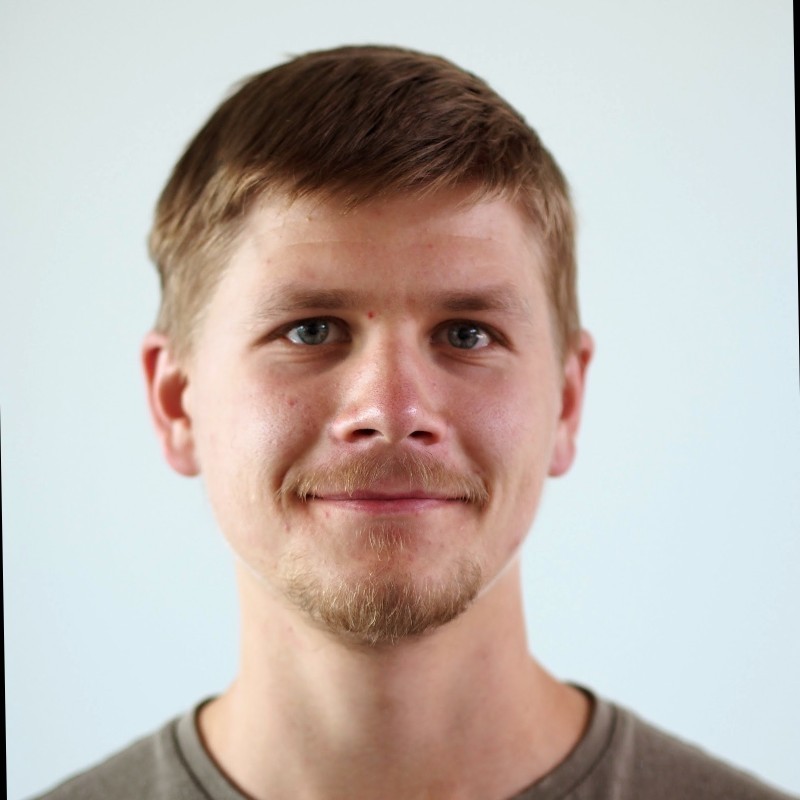
Julius Gelšvartas
Chief R&D Officer, Co-Founder @ Matom.AI
Chief R&D Officer, Co-Founder @ Matom.AI
I build real-world systems where spatial intelligence meets safety and precision. As Chief R&D Officer and Co-Founder at Matom.AI (http://matom.ai/), I lead a team focused on turning 3D spatial data — LiDAR, point clouds, and computer vision — into field-ready solutions that actually work in the physical world.
My work sits at the intersection of AI and space: how do machines understand the geometry of the world around them, and how do we make that understanding reliable enough to act on? One answer is Sharpsee — a platform that brings spatial AI to industrial worksites, using 3D vision and edge inference to detect risky patterns, capture near-miss events, and improve safety without compromising privacy or performance.
With 15+ years across robotics, autonomous navigation, infrastructure inspection, and large-scale point cloud processing, I've seen spatial AI evolve from a research curiosity to critical infrastructure. I hold a PhD in Informatics Engineering and an MSc in AI from the University of Edinburgh.
The principle hasn't changed: build what works, and what matters.
I build real-world systems where spatial intelligence meets safety and precision. As Chief R&D Officer and Co-Founder at Matom.AI (http://matom.ai/), I lead a team focused on turning 3D spatial data — LiDAR, point clouds, and computer vision — into field-ready solutions that actually work in the physical world.
My work sits at the intersection of AI and space: how do machines understand the geometry of the world around them, and how do we make that understanding reliable enough to act on? One answer is Sharpsee — a platform that brings spatial AI to industrial worksites, using 3D vision and edge inference to detect risky patterns, capture near-miss events, and improve safety without compromising privacy or performance.
With 15+ years across robotics, autonomous navigation, infrastructure inspection, and large-scale point cloud processing, I've seen spatial AI evolve from a research curiosity to critical infrastructure. I hold a PhD in Informatics Engineering and an MSc in AI from the University of Edinburgh.
The principle hasn't changed: build what works, and what matters.